Black Swan Green by David Mitchell

“If you show someone something you’ve written, you give them a sharpened stake, lie down in your coffin, and say, ‘When you’re ready’.”

A desperate need to make sense of the world occupies a young boy in provincial England, and we watch as his future shifts in ways out of his control while he navigates his third year at secondary school.

If there is one area of writing where David Mitchell excels, it’s voices. In two or three sentences, he can make a character crawl out from the book pages and say, “Hello, I’m several people from across your life unified in one person. Remember me?” It’s almost eerie how fast he can make a character feel complex and interesting.

There’s a fine line when writing about teenagers, as trying to capture the self-centred nature inherent to most can be irritating to older readers, but if you go too far the other way the characters feel almost inhuman, like they’re lifeless cypher a being used by the author to make a point about their own childhood. The main character here has a naivety which is relatable, but never crosses into frustrating. That is just hard to pull off.

Mitchell is great at understanding the unspoken rules of teenage boys, the way word-choices, nicknames, and even the place you sit on the bus can act as a way the rest of the world can use to judge you, place you.

Black Swan Green captures the claustrophobia inherent to adolescence, the constriction many feel every time the uncomfortable realities of adult life creep closer towards them. He understands but never glorifies youth. He accepts that growing up can be extraordinarily painful and boring, but it can change you in ways you would never give up for the world.
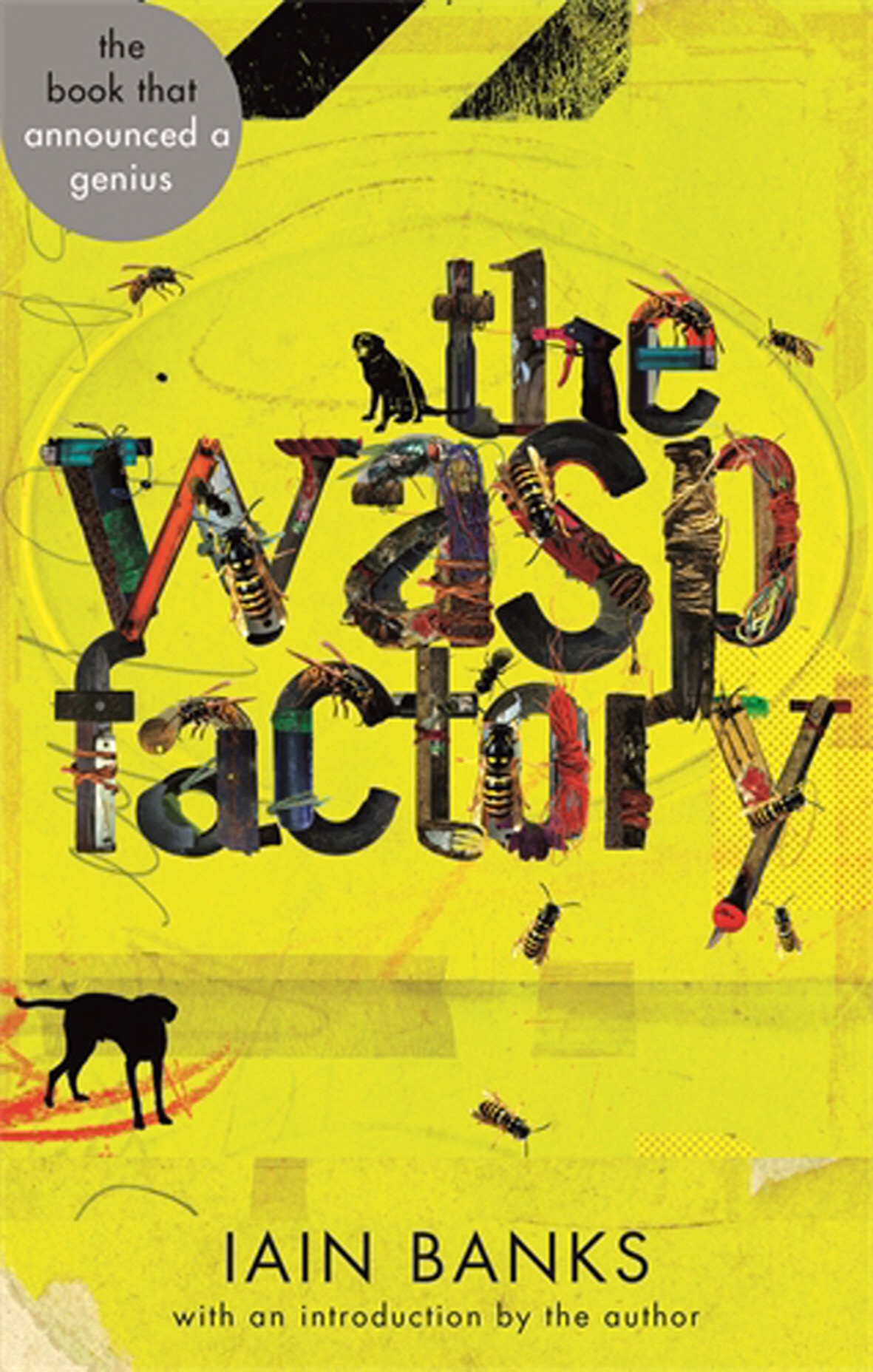
The Wasp Factory by Iain Banks

“It was just a stage I was going through.”

For some reason, I’d always thought this was a coming-of-age story in the vein of Black Swan Green or Catcher in the Rye. I don’t know how I got this impression, but it made the first few pages a surprise, let me tell you. There was less navel-gazing and more shamanistic rituals and dead animals than I expected.

Frank is young, Scottish, a bit of a drunk, and likes murders involving children.

Unrepentantly cruel characters are almost exclusively obstacles for Good People to overcome in fiction. Human monsters are such easy sources of conflict, and can create a natural end point for novels: their defeat or death. Very few people will not cheer when Voldemort gets snuffed, after all. The bloke had it coming.

To have someone who does truly disturbing things as your protagonist, to create sympathy for a devil, is risky. Maintaining reader investment while they are horrified by the main character’s actions is a hard tightrope to walk across, and I had worries that Banks hadn’t managed it, fears that he was faltering around two thirds of my way through. I was, happily, wrong.

The setting here is appropriately isolated, and trickles of rain and looming grey clouds keep the mood somber. You aren’t allowed to become desensitised to the savage acts, and the grounded setting might be part of that. This isn’t ultra-violence, it’s plain, unglamorous, human cruelty. While unsettling, you’ll want to keep reading; you’ll want to keep your eyes fixed on these horrible events just to figure out where things are going. This novel is just short enough that the occasionally slow pace never feels frustrating.

There’s a snarky tone to the narration, an acerbic wit that gives the novel a small, needed touch of levity, but it’s black humour which never feels inappropriate. Banks uses not just talent, but grace, to reveal and warn of the inner-workings of a killer.

This book puts cruelty under a microscope, and displays the thought processes and logic of a sane but angry young person.

Despite the brutal nature of many scenes, this isn’t a book about inherent evil. It’s more concerned, in my opinion, with the dangers of confusion. I can’t say more without spoilers, but it all ties together and makes every amount of sense by the end: a cycle of human callousness lead to all this pain.

Shocking but poignant, I was horrified while reading but came away pleasantly surprised at how good a novel this was.

Labyrinths by Jorge Luis Borges

“We have dreamt the world. We have dreamt it as firm, mysterious, ubiquitous in space and durable in time: but in its architecture we have allowed tenuous and eternal crevices of unreason which tell us it is false.”

Labyrinths, a book of short stories by Jorge Luis Borges, is dense. Neutron star dense. Its overwhelming scope makes little moments feel massive, as Borges can use ten pages to create what would take others hundreds.

He tries to make you process the impossible as plausible, and the results are mind-bending.

Despite the grand ambitions and heady concepts, the style here is smooth. Borges’ prose is academic and understated, so things never feel (unintentionally) frustating. Erudition comes roaring out of this thing like heat, so it can take a while to adjust; you may want to shut it and cool off occasionally, or you’ll lose focus. But oh, it’s worth it.

The stories here are so varied in theme, tone, and genre, that I can see just about any of them being someone’s favourite from the collection. Not every one will stay with you, and some you might even find boring if they’re not written in a style you appreciate, but they all have extremely creative and well-thought-out ideas. A few, like “The Immortal”, “The Circular Ruins”, and “The House of Asterion”, are some of the greatest short stories you’re likely to read.

White Teeth by Zadie Smith

Image result for zadie smith white teeth

“A trauma is something one repeats and repeats, after all, and this is the tragedy of the Iqbals–that they can’t help but reenact the dash they once made from one land to another, from one faith to another, from one brown mother country into the pale, freckled arms of an imperial sovereign.”

This is a novel about identity, a lengthy examination of a simple idea: the impossibility of escaping your family’s past.

The idea that we are islands — people who can live apart from the histories that brought us to the piece of rock we stake our claims on — is batted about in this book like a mouse by an angry cat. Characters, particularly the second-generation children, slip in and out of different cultural identities like they’re trying on new suits.

Sometimes these characters want to abide by the cultures they’ve been taught to value; sometimes they are making desperate attempts at individuality, at casting aside the expectations of not just their families but the society they are trying to make their way in. They have mixed success, but it’s consistently entertaining to read about.

The omniscient narrator feels like a calm voice in the middle of a hurricane, a dispassionate yet wise woman who is guiding you through a complicated maze of her own making.

It sometimes feels like this novel doesn’t know where it’s going, like the main plot-line has taken a back-seat to whatever random musings have appeared in different characters’ minds, sometimes for fifty-pages at a time, but maybe that’s appropriate. Things rarely occur in real life, after all, in simple, straight forwards ways, or the way we expect, so why should they here?

White Teeth is an entertaining look at Britain’s identity crisis, and a great snapshot of the different forces which help make the UK the complicated, diverse, interesting place it is.