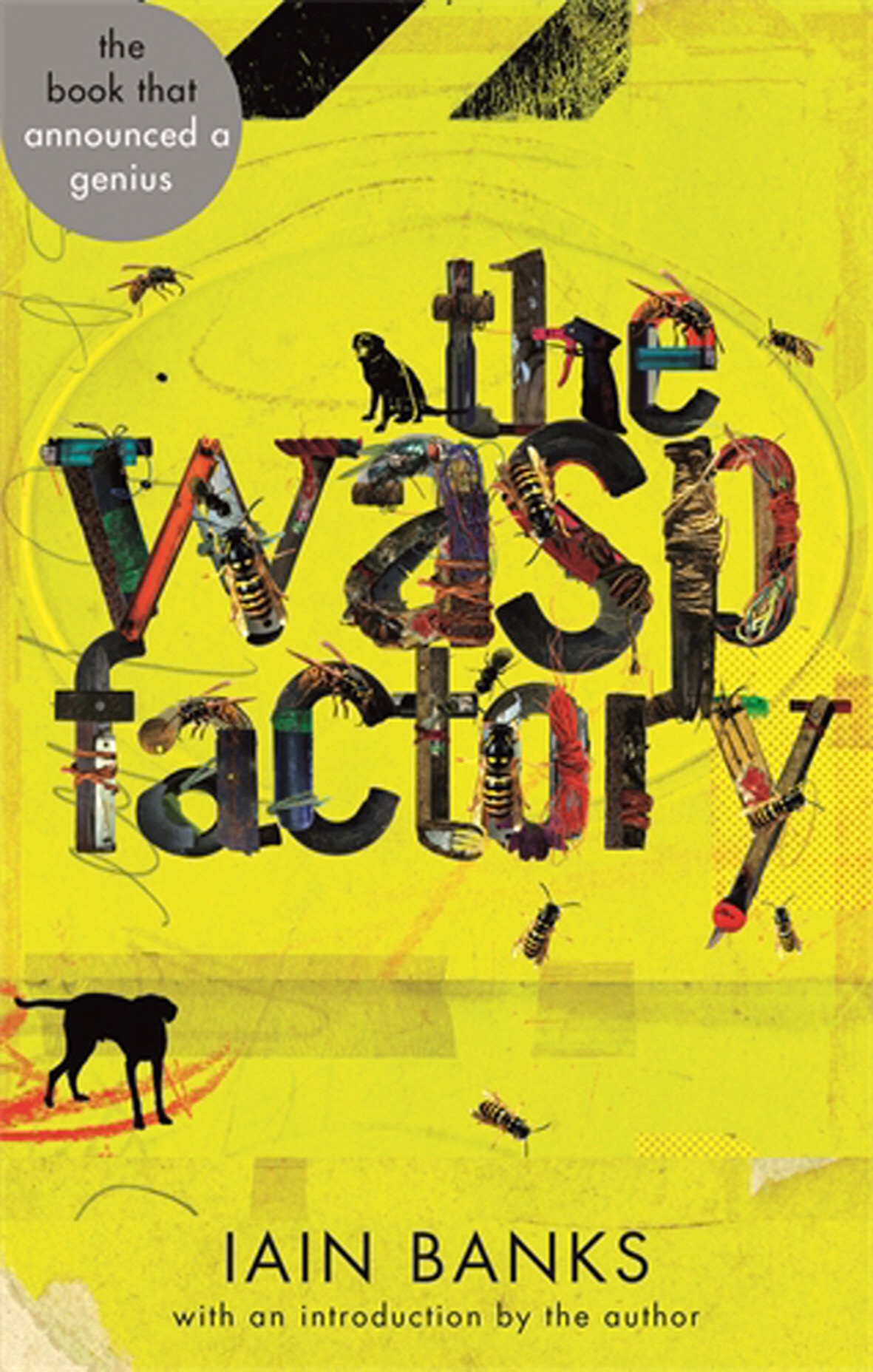
The Wasp Factory by Iain Banks

“It was just a stage I was going through.”

For some reason, I’d always thought this was a coming-of-age story in the vein of Black Swan Green or Catcher in the Rye. I don’t know how I got this impression, but it made the first few pages a surprise, let me tell you. There was less navel-gazing and more shamanistic rituals and dead animals than I expected.

Frank is young, Scottish, a bit of a drunk, and likes murders involving children.

Unrepentantly cruel characters are almost exclusively obstacles for Good People to overcome in fiction. Human monsters are such easy sources of conflict, and can create a natural end point for novels: their defeat or death. Very few people will not cheer when Voldemort gets snuffed, after all. The bloke had it coming.

To have someone who does truly disturbing things as your protagonist, to create sympathy for a devil, is risky. Maintaining reader investment while they are horrified by the main character’s actions is a hard tightrope to walk across, and I had worries that Banks hadn’t managed it, fears that he was faltering around two thirds of my way through. I was, happily, wrong.

The setting here is appropriately isolated, and trickles of rain and looming grey clouds keep the mood somber. You aren’t allowed to become desensitised to the savage acts, and the grounded setting might be part of that. This isn’t ultra-violence, it’s plain, unglamorous, human cruelty. While unsettling, you’ll want to keep reading; you’ll want to keep your eyes fixed on these horrible events just to figure out where things are going. This novel is just short enough that the occasionally slow pace never feels frustrating.

There’s a snarky tone to the narration, an acerbic wit that gives the novel a small, needed touch of levity, but it’s black humour which never feels inappropriate. Banks uses not just talent, but grace, to reveal and warn of the inner-workings of a killer.

This book puts cruelty under a microscope, and displays the thought processes and logic of a sane but angry young person.

Despite the brutal nature of many scenes, this isn’t a book about inherent evil. It’s more concerned, in my opinion, with the dangers of confusion. I can’t say more without spoilers, but it all ties together and makes every amount of sense by the end: a cycle of human callousness lead to all this pain.

Shocking but poignant, I was horrified while reading but came away pleasantly surprised at how good a novel this was.
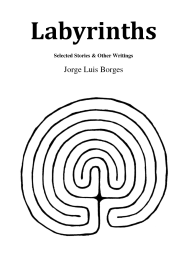
Labyrinths by Jorge Luis Borges

“We have dreamt the world. We have dreamt it as firm, mysterious, ubiquitous in space and durable in time: but in its architecture we have allowed tenuous and eternal crevices of unreason which tell us it is false.”

Labyrinths, a book of short stories by Jorge Luis Borges, is dense. Neutron star dense. Its overwhelming scope makes little moments feel massive, as Borges can use ten pages to create what would take others hundreds.

He tries to make you process the impossible as plausible, and the results are mind-bending.

Despite the grand ambitions and heady concepts, the style here is smooth. Borges’ prose is academic and understated, so things never feel (unintentionally) frustating. Erudition comes roaring out of this thing like heat, so it can take a while to adjust; you may want to shut it and cool off occasionally, or you’ll lose focus. But oh, it’s worth it.

The stories here are so varied in theme, tone, and genre, that I can see just about any of them being someone’s favourite from the collection. Not every one will stay with you, and some you might even find boring if they’re not written in a style you appreciate, but they all have extremely creative and well-thought-out ideas. A few, like “The Immortal”, “The Circular Ruins”, and “The House of Asterion”, are some of the greatest short stories you’re likely to read.

A Brief History of Time by Stephen Hawking

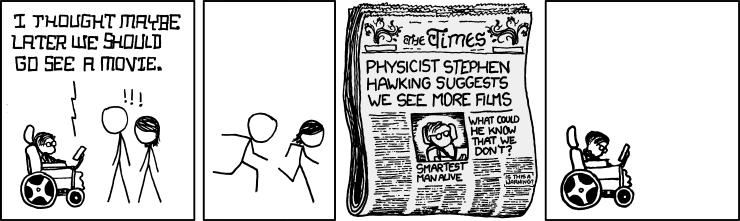
(XKCD – 799. This comic isn’t relevant to the book review, really, I just wanted an excuse to post it…)

“Today will still yearn to know why we are here and where we came from. Humanity’s deepest desire for knowledge is justification enough for our continuing quest. And our goal is nothing less than a complete description of the universe we live in.”

I recently noted that great writers can make the intricacies of life seem simple and help you better understand the world around you with just a genius turn of phrase. Put another way, it takes an incredible mind to make the complex seem manageable. Hawking condenses time itself into two-hundred and forty pages here, and through crisp examples leaves you (for the most part) with a basic understanding of these impossibly large subjects. Metaphors keep this book alive.

Quarks; general relativity; string theory; quantum physics; black holes. These are often thought of as theories far outside a layman’s potential for easy understanding, so some people brush them aside, on the basis that there’s too much to learn and no clear place to start. This book gives you a good foundation for wrestling with huge ideas, and much more. A Brief History of Time isn’t as quick as a Brian Cox documentary, but it’s not too hard. Hawking proves that while some scientific theories can be anything but intuitive, when they’re explained by a great mind they’re bloody fascinating.

My relevant amazing science credentials going into this: GCSE physics and a love of documentaries, especially those which trick me into thinking I’ve understood a bit about space (especially when Carl Sagan’s narrating). It’s therefore a testament to this book’s readability that I finished it, let alone came away with the (possibly delusional) impression that I’d understood a good chunk. I’d recommend this to anyone who’s curious about the history of everything.

Annihilaton by Jeff VanderMeer

“That’s how the madness of the world tries to colonize you: from the outside in, forcing you to live in its reality.”

Annihilation is a horror/sci-fi which takes place in “Area X”, a strange ecosystem that’s been cut off from the rest of the world by a border which stretches the minds of those who try to cross it.

Tension is the emotion at the heart of this story. How far can you be pushed and changed before your own self crumbles? There was a lot going on under the surface of this novel, and a Lovecraft-esque atmosphere helps push the question as to what humans can and cannot understand.

The prose is strong (for the most part) and I got through it quickly because of the excellent pacing, so I’m looking forward to the sequels. I’ll be hoping for more actual horror and less inner dialogue about how terrifying everything is.

White Teeth by Zadie Smith

Image result for zadie smith white teeth

“A trauma is something one repeats and repeats, after all, and this is the tragedy of the Iqbals–that they can’t help but reenact the dash they once made from one land to another, from one faith to another, from one brown mother country into the pale, freckled arms of an imperial sovereign.”

This is a novel about identity, a lengthy examination of a simple idea: the impossibility of escaping your family’s past.

The idea that we are islands — people who can live apart from the histories that brought us to the piece of rock we stake our claims on — is batted about in this book like a mouse by an angry cat. Characters, particularly the second-generation children, slip in and out of different cultural identities like they’re trying on new suits.

Sometimes these characters want to abide by the cultures they’ve been taught to value; sometimes they are making desperate attempts at individuality, at casting aside the expectations of not just their families but the society they are trying to make their way in. They have mixed success, but it’s consistently entertaining to read about.

The omniscient narrator feels like a calm voice in the middle of a hurricane, a dispassionate yet wise woman who is guiding you through a complicated maze of her own making.

It sometimes feels like this novel doesn’t know where it’s going, like the main plot-line has taken a back-seat to whatever random musings have appeared in different characters’ minds, sometimes for fifty-pages at a time, but maybe that’s appropriate. Things rarely occur in real life, after all, in simple, straight forwards ways, or the way we expect, so why should they here?

White Teeth is an entertaining look at Britain’s identity crisis, and a great snapshot of the different forces which help make the UK the complicated, diverse, interesting place it is.

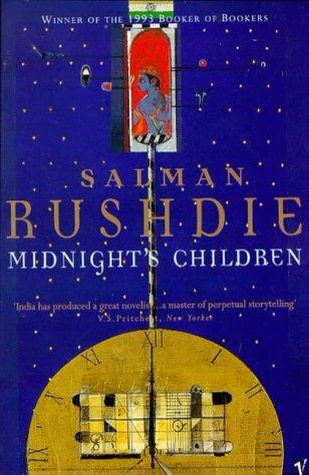
Midnight’s Children by Salman Rushdie

“Why, alone of all the more-than-five-hundred-million, should I have to bear the burden of history?”

Trying to describe Midnight’s Children is like trying to describe a country: I can outline the flavour of the place, and say what I liked best, but it’s difficult to explain what actually makes it special or worth a visit. This book is bold, exciting, playful, thoughtful, funny, and sad, but if I had to use just one word to describe it, one that takes into account just how weird it gets at times, it would be ‘fantastic’.

Saleem Sinai is born at the exact moment India becomes independent, and as such has a monumental sense of importance and some rather strange abilities. Over the course of Midnight’s Children, the title of which refers to the other children born on the same day as Saleem, we trace his family to understand why he — and thus India — are the way they are.

Saleem’s entire family are woven throughout important historical events in India, giving readers peaks through a small hole into different parts of history’s inner-workings. This means the book feels fragmented sometimes, but when the story’s finished you can put all the pieces together in your mind to form something of ridiculous scope and beauty. The gorgeous prose is what ties things together and keeps the novel from buckling under its own weight; combined with Rushdie’s sly observations which never stop feeling interesting and insightful, the language here is just outstanding.

A weird mixture of history, fantasy, truth and lies, Midnight’s Children attempts to condense India into a novel. It shouldn’t work, it’s just too big, but it absolutely blew me away. The best way I can think of to summarise why is to bastardise a Walt Whitman quote: this book contains multitudes.

Oblivion by David Foster Wallace

“What goes on inside is just too fast and huge and all interconnected for words to do more than barely sketch the outlines of at most one tiny little part of it at any given instant.”

This is one of the most perplexing books I’ve read in a long time. I should have expected that from Wallace, whose Infinite Jest sent my mind reeling in eight different directions (although I still loved it), but the mixture of lucidity and surrealism here cast a strange tone over the whole narrative.

A collection of short stories, the highlights for me here were Good Old Neon (which I’d read before) and Another Pioneer. The former is a powerful portrayal of suicide, bleak but with one of the most electrifying and beautiful endings I’ve ever read. The latter is the retelling of a retelling of a retelling of something that was overheard on a plane, the tale of a savant living in a tribal culture which examines tradition and the human aversion to change.

Some of the other stories, however, dragged. The Soul is Not a Smithy had some fantastic descriptions of daydreaming, but the rest never amounted to much. The Suffering Channel could have been cut by a third and not lost much, in my opinion. Oblivion, the title story, felt like it was going nowhere but then saved itself with a really simple (almost cliche) but somehow incredibly unexpected ending.

Not my favourite DFW so far, and I definitely wouldn’t recommend this to someone who hadn’t read him before, but Oblivion was still extremely ambitious and at times brilliant.

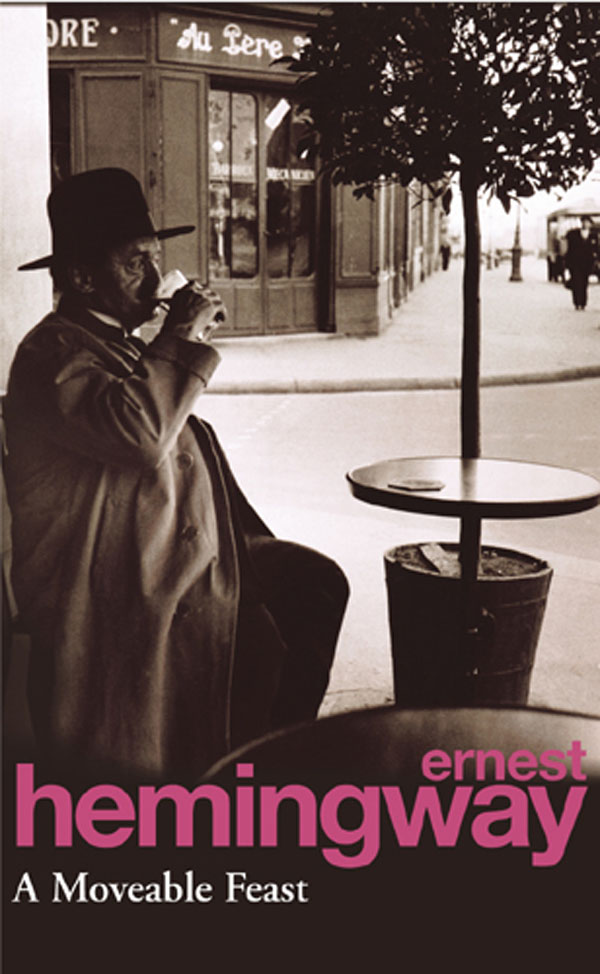
A Moveable Feast by Ernest Hemingway

“We ate well and cheaply and drank well and cheaply and slept well and warm together and loved each other.”

I didn’t enjoy Paris. I found it cold and wet, the waiters were rude, and the stately architecture was counteracted by the smell.

Hemingway’s Paris was a century before mine, but they were the same streets. It’s like when someone loves a movie you found dull: it doesn’t matter how much they marvel at the cinematography or acting. It won’t change that you didn’t connect.

But the focus here wasn’t on the city, but on a peculiar time in Hemingway’s life when everything felt alive; he met some of the most interesting people of the 20th century, drank good wine, tasted delicious food. He made good art. He distills the years that were so important to him with trademark brevity, and makes even his cold nights in an unheated apartment seem envious.

It just works.

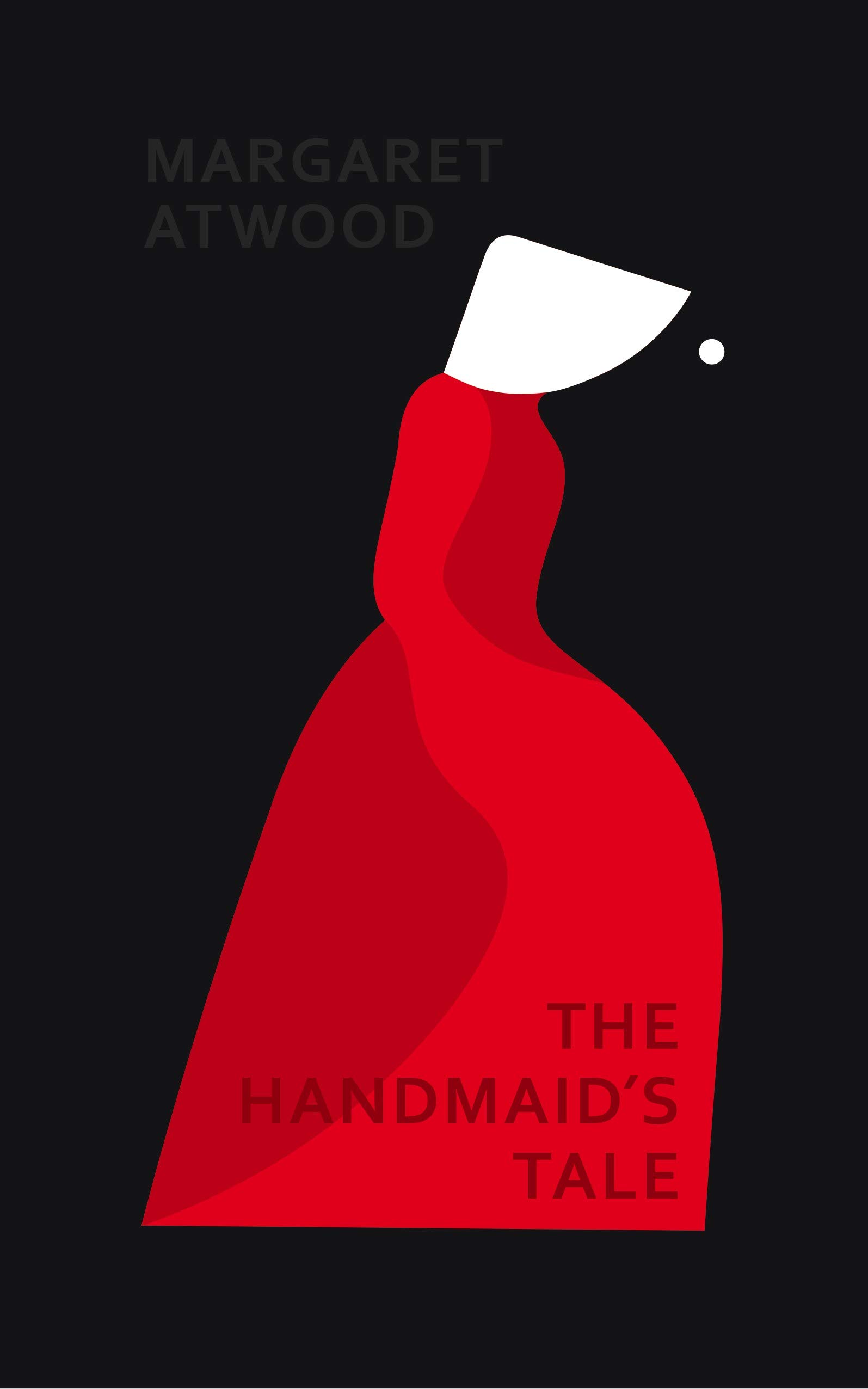
The Handmaid’s Tale by Margaret Atwood

Image result for The Handmaid's Tale by Margaret Atwood

‘Those years (of equality) were just an anomaly, historically speaking,’ the Commander said. ‘Just a fluke. All we’ve done is return things to Nature’s norm.’

The Handmaid’s Tale is a stylistically beautiful, worryingly plausible novel about a world in which the United States government has been overthrown by civil war, and a totalitarian Christian theocracy has been installed in its place. This isn’t the futuristic nightmare of 1984 or the Hunger Games, however, wherein technological advances and inequalities make oppression simple. This is a fictional world which demonstrates how it easy it would be to lose the progress of the last few centuries made, in regards to gender and race.

Before reading The Handmaid’s Tale, I had seen Margaret Atwood’s comments denying she was a science-fiction writer. Oryx & Crake fit snugly in the genre, and so I viewed her attempts at distance from with a degree of scepticism. I thought of her as another writer attempting to escape from the label of sci-fi for the same reason Vonnegut described: “I have been a sore headed occupant of a file drawer labelled ‘science fiction’ […], and I would like out, particularly since so many serious critics regularly mistake the drawer for a urinal.”

The Handmaid’s Tale is not science-fiction. This isn’t because it has literary qualities; if that was a qualifier, Gene Wolfe would have escaped the drawer along with her. It’s because it takes place in a dystopia, yes, but not one undone by technological advances and scientific arrogance like the world of Oryx and Crake (which was incidentally why the book grated on me occasionally), or even where technology is used to particularly insidious means in the style of 1984. Atwood predicts no new force which wrenches our freedom from us. It is a regression to the values of the old world, a desire for simple, comforting roles of gender enforced by those who are most powerful, which erodes hard won rights.

There are a number of direct parallels across many modern states for the subjugation that women undergo here, but Atwood also draws heavily from the history of Antebellum slavery on topics such as literacy and Biblical justification for cruelty. She’s done her research on how oppression and slavery can manifest and maintain power in societies, and as such this dystopia is hauntingly believable.

Cities on the Plain [Border Trilogy #3] by Cormac McCarthy

“He sat a long time and he thought about his life and how little of it he could ever have foreseen and he wondered for all his will and all his intent how much of it was his doing.”

Cities of the Plain is the most focused of The Border Trilogy. It’s less grandiose than All the Pretty Horses, and less ponderous than The Crossing, but extraneous elements which either dragged or elevated the preceding books — depending on your point of view — have been removed: the prose is smoother; there are (fewer) page-long discussions with wise strangers imparting wisdom; there is less rumination on the landscape. This is because this novel is more eager to focus on two subjects more directly: obsession, and the world’s disregard for what you think it should be.

Modernity has swept into McCarthy’s South West. Cars are as common to see as horses, and the lights of cities in the distance are ever-present. The army is trying to claim the land our protagonists live upon. A sense of dread hangs over proceedings like storm clouds.

John Grady Cole and Billy Parham return. They occasionally venture across the Mexican border, which unsurprisingly does not, as those that have read the preceding books can guess, keep their lives simple.

Cole’s fixation on a young prostitute showcases his naivete and with Parham’s dry wisecracking mouth at his side he comes across as more relatable than the confident horse-whisperer of the first book. He is out of his element here, and more interesting for it. The dual-protagonists play off each other in funny and tender ways, echoing lost relationships from the last books which might otherwise have been forgotten, giving a sense of poignancy to the events.

There’s a great sense of suspense as the novel falls into place, the feeling that things cannot end well. When I put it down after finishing I felt catharsis. It’s a great end to an inspired, occasionally fun but deeply sad series that I enjoyed a massive amount. Highly recommended.