The Book of Strange New Things by Michel Faber

  
“The world changes too fast. You take your eyes off something that’s always been there, and the next minute it’s just a memory.”

The Book of Strange New Things is a melancholy novel about love and devastation. That might sound like a contradiction in terms, but Faber approaches the well-worn territory of inter-species colonialism with a gentle, sad touch that makes some very old tropes feel new again. This was written as Faber’s wife was dying, and a desperate longing for the restoration of someone in your life you can feel slipping away from you makes the Book of Strange New Things a sad but memorable read.

It might be a sign of the times that a novel exploring religion and aliens has received rave reviews — would it have twenty years ago, when the lines between “literature” and genre-novels were more obvious? Probably not. This change is for the better:Peter, the protagonist, is a Christian missionary sent to outer space. Letters to and from his wife punctuate the narrative; back on Earth things are falling apart. Meanwhile, we watch as the inhabitants of this new planet adopt a religion they might not understand and the strange world begins to shake Peter’s faith.

When talking about all of this, genre definitions are stretched in usefulness. It’s sci-fi, true; but there are many who might hear that and therefore dismiss this book, putting it in a box where they perceive human emotions as being secondary in importance. There’s a literary resonance here reminiscent of Ursula Le Guin, and a nuanced approach to religion that should intrigue fans of sci-fi, literary fiction readers, believers and (thankfully for me) non-believers alike.

Moby Dick by Herman Melville

“There is a wisdom that is woe; but there is a woe that is madness.”

This is an extreme novel. Everything is heightened: language, characters, events, emotions. The beginning feels like the start of a light-hearted adventure in the vein of Robinson Crusoe, with wacky characters, funny misunderstandings, and a protagonist in search of excitement. You only hear whispers about the strange captain who will be manning the Pequod, the ship our protaganist will be leaving on, and hints of madness. As the book goes on, though, the stakes get higher and higher as Ahab and his mad pursuit of the famous white whale dominates the narrative. Our narrator barely even mentions himself in the last half of the book. The danger and insanity gleaming in the captain’s eye is both intriguing and clearly going to lead to disaster, but he’s all the more fascinating for it, arrogantly casting himself as a worthy opponent of not just the white whale but the world itself:

“All visible objects, man, are but as pasteboard masks. But in each event — in the living act, the undoubted deed — there, some unknown but still reasoning thing puts forth the mouldings of its features from behind the unreasoning mask. If man will strike, strike through the mask! How can the prisoner reach outside except by thrusting through the wall? To me, the white whale is that wall, shoved near to me. […] Talk not to me of blasphemy, man; I’d strike the sun if it insulted me.”

The ornate, beautiful language — “the waves rolled by like scrolls of silver; and, by their soft, suffusing seethings, made what seemed a silvery silence, not a solitude” — is great to read, and references to the Bible, ancient Greece, Rome, Shakespeare, and others feel purposeful rather than solely as something meant to be impressively ‘learned’, as they make small events feel like they’re part of something large and important. These influences, combined with how difficult life on the seas was in this period, mean you almost believe Ahab when he speaks as though they’re hunting Gods rather than leviathans. All of this, combined with the sheer length of this thing, make the book almost as epic in scale as the whales it’s so fixated on.

The middle was why this was not an easy read, though, specifically absolute pain-staking detail in the sections where Ishmael puts the stories’ momentum on hold to talk to us about whale biology. Some of these help you better grasp the bravery and difficulties in the life of whale hunter, not to mention the the dangers posed by the white whale Moby Dick himself, but others drag the pacing to a grinding halt. These aren’t weaved very carefully with the narrative, mind, or explained by characters; they’re just detailed, over and over again, as though you’re reading an encyclopaedia.

Still, taken as a whole ‘Moby Dick’ is an obviously great novel. The beginning and ending 200 pages were some of the best prose I’ve ever read (Melville has earned his reputation), and there was even a surprising amount of action. The characters are engaging, too. If you’re a patient reader, don’t let this book’s reputation fool you. With a great sense of humour tempering the more serious moments, it’s more fun to go through than you might expect.

I never want to read about cetology again, though.

House of Leaves by Mark Z. Danielewski

“…and there you have it, another body on the floor surrounded by things that don’t mean much to anyone except to the one who can’t take any of them along. ” There is nothing as unsettling as not knowing what the hell is going on.

House of Leaves takes some fairly standard horror tropes – a wealthy family moving into a new home, moving hallways, encroaching insanity – and slides them into a book about a book about a book about an academic analysis of a film (called The Navidson Record), and because it’s all smart, tense, and inventive, this novel is far more engaging than it sounds.

There’s something wrong with the house the film takes place in. Something very, very wrong.

Danielewski is determined to make you afraid of the dark. Adult fears are made explicitly metaphorical as the house plays on characters’ insecurities and baggage, which gives a focus to the narrative as things get stranger and stranger.

I very rarely get scared when reading books (horror games are another matter). That’s why it was so surprising that while reading this thing, during a couple of moments, I felt true fear gnaw at me rather than the nervous excitement which horror stories normally draw out. It’s also very well paced, as I tore through this thing in around a week. I just had to know what happened.

This is a very, very flawed book though. The sections with Johnny Truant are almost the complete opposites of those about The Navidson Record, for what I’m guessing are tenuous thematic purposes: instead of academic, the tone is casual; instead of claustrophobic or daunting, things are grounded; instead of carefully written, things are sappy and dull. Truant’s prose is painfully cliché times, particularly when it comes to descriptions of women (“blue eyes, like sea-ice”, “eyes would sparkle like the Northern sky”, “everything about her shimmered”), and Danielewski tries to use a stream-of-consciousness style that falls flat. The contrast of the cool academic analysis of The Navidson Record only makes this worse by comparison. I literally groaned out loud more than once when I realised another lengthy Truant section was starting. The formatting changes later in The Navidson Record in the book might also come across as gimmicky if you’re not in a generous mood.

When House of Leaves works, it’s because Danielewski understands how to cleverly subvert readers’ expectations. He plays on our assumptions about genre and the world around us and shreds them, placing them back together with masking tape, out of order, and with confusing annotations. This book just shoots too high sometimes, and becomes pretty silly for stretches as a result. It’s still worth a read, particularly if you’re in the mood for something experimental, just bear in mind you’ll need patience.

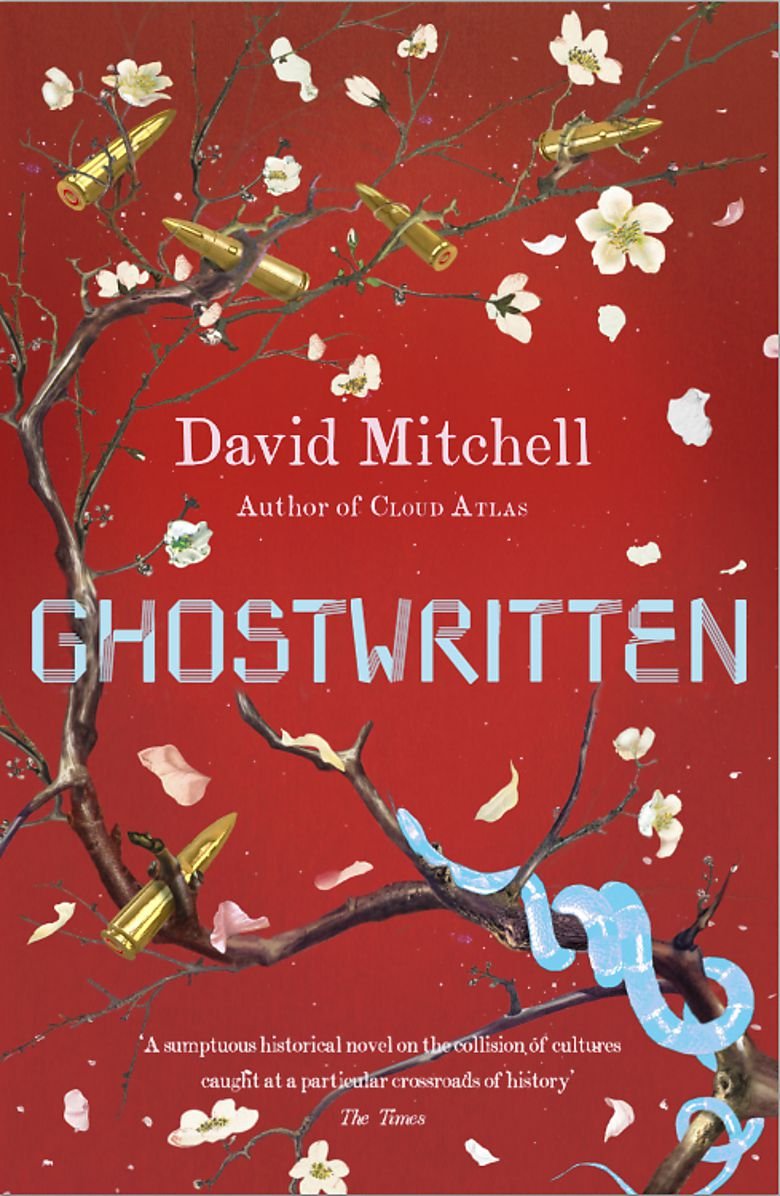
Ghostwritten by David Mitchell

Image result for ghostwritten

“I am going to tell you a secret. Everything is about wanting. Everything. Things happen because of people wanting. Watch closely, and you’ll see what I mean.”

Ghostwritten is a globe-spanning novel with ten main characters who are connected by some very strange coincidences. Things start with a gas attack in Tokyo, but over the next four hundred pages things take some very strange turns. If you want a novel that’s unpredictable and varied, this is it.

As always, Mitchell’s writing is just plain gorgeous. He could describe a man waiting in line at the post-office and I’d be hooked. His sentences are funny and expressive with light and easy rhythm. Observations which other writers could make sound trite never come across as simple because of their place in such an unusual narrative and thanks to his flair on a sentence by sentence level.

“We drift, often on a whim, searching for something to search for.”

The sections in Asia often have mythical and spiritual touches, contrasting with the more sci-fi and conspiracy influenced Western stories, which move across St Petersburg, London, and New York. You will be left wondering what the fuck is going on. I mean this in a good way.I can’t talk about many of the locations’ veracity here, but as per usual Mitchell represents modern England more authentically than any other modern novelist I’ve read (barring maybe Zadie Smith). This let me feel in safe hands when I was placed in cultures I’m not familiar with. Ghostwritten’s cities and villages ooze authenticity. The ten narrators feel real, with distinct motivations and personal ticks; a yearning for a secure place in the world connects them all, but their unique perspectives never come across as contrived. A teenager in Tokyo, for example, observes how cultures other than his own have changed his way of thinking:

“Then one of them asked why Japanese kids try to ape American kids? The clothes, the rap music, the skateboards, the hair. I wanted to say that it’s not America they’re aping, it’s the Japan of their parents that they’re rejecting. And since there’s no home-grown counter culture, they just take hold of the nearest one to hand, which happens to be American. But it’s not American culture exploiting us. It’s us exploiting it.”

Some of the most fascinating stuff takes place in Mongolia, where an incorporeal being of some sort is floating from host to host, struggling to understand where it came from. That such a strange idea works so easily is a testament to the way Mitchell can, when he is careful, take you in directions you had never thought of while still satisfying traditional story needs.

Stories slide from realistic to fantastical on a whim, with Mitchell disregarding traditional notions of genre. Despite the disjointed tone and themes, things stay feeling grounded even when events are plain impossible.

Unfortunately, while the final quarter is still powerful on a moment-to-moment level, there are simply too many disparate threads for the novel to satisfyingly tie everything together. Unlike Cloud Atlas, which felt like a very cohesive whole, all the sections of Ghostwritten felt more like fascinating short stories which happened to have connections with each other, rather than as different parts of a cohesive whole. The world-ending plotline felt tacked on to let things end with a bang and add a sense of grandeur instead of giving thematic weight. None of this is helped by Mo Muntervary getting introduced near the end. She has a vital story when it comes to the overarching narrative, but is also the least convincing character. Her chapter came across as an excuse for Mitchell to talk in physics metaphors and exposition in a hasty attempt to set up the finale.

I’m still glad I read this though. Ghostwritten is an imperfect gem, with fascinating character work and prose. It’s just a shame it never quite blends together as a full novel.

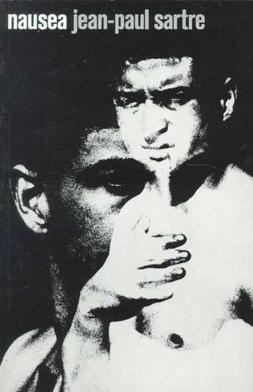
Nausea by Jean-Paul Sartre

I have discovered where the stereotype of the depressed, smoking Frenchman, who stares into his tea in cafés and despairs about the pointless of the universe, comes from. I have found navel gazing in its purest form, and I have stared into its whiney, shrivelled heart. This novel had some fantastic ideas and concepts behind it, but blimey did it test my patience at times.

Nausea by Jean-Paul Sartre is short, it’s weird, and it’s depressing. None of these things are necessarily negatives in a book – there are a lot of similarities here to Notes from Underground and The Stranger, both which I really enjoyed. In Nausea, though, I never found myself convinced by the protagonist’s struggles. He felt more like an abstraction than a person.

While the Underground Man was clearly isolated and confused and the story around him a bit polemic, his problems were human and relatable, if extreme. Antoine Roquentin, however, felt as though he had been created with the sole purpose of exploring existentialism, which wouldn’t necessarily be a problem, but every problem he faces is metaphysical and absurdly theoretical. This means the human drama which is also explored comes across as hollow because we just don’t know him or anyone else in this novel as a person, only as walking ideologies.

There were some interesting observations about the way we should appreciate existence on a moment to moment basis, but it all felt more like a message with a story than a story with a message. I’ll be reading Sartre’s non-fiction if I pick up his writing again, as at least that way I’ll know exactly what I’m in for.

Brideshead Revisited by Evelyn Waugh

“O God, make me good, but not yet.”

I began to write this review of Brideshead Revisited almost immediately after I put the book down. That’s rare. Normally I take a day or two to mull things over, and let my reaction settle, but the ending here made me dissapointed and I wanted to vent. That’s rare, too. I like books a lot more often than I dislike them. Vonnegut was probably an influence on the way I approach reading, although I’m not quite as forgiving as he is:

“As for literary criticism in general: I have long felt that any reviewer who expresses rage and loathing for a novel or a play or a poem is preposterous. He or she is like a person who has put on full armor and attacked a hot fudge sundae or a banana split.”

This is true to a degree. Unless an author is knowingly, maliciously wasting my time or looking to be deliberately condescending or irritating – and I’d like to give most published authors the benefit of the doubt on this front, as (outside of maybe Ellis) writers tend to have bigger aims than expressing their own misanthropy – I will set the book down, realize that it probably just wasn’t for me, and move on.

Brideshead Revisited’s ending made me annoyed because it deflated a novel which I had been enjoying tremendously. It’s a very, very well written book with acutely drawn characters, and is a great evocation of a lost time. It also has one of the most unsatisfying few pages that I’ve ever read, a conclusion that undercuts what I had previously enjoyed about the story and themes.

Waugh is at his best when he’s rolling in moral decay. At the start, I thought this novel was a direct descendant of The Great Gatsby, due to both its intricate and beautiful language and the acute representations of the upper class as hedonistic and morally bankrupt. Unfortunately, while the drama and writing – which are surface level elements of all stories, despite how much I love them both – maintain the high level reached earlier in the novel, the simple (yet, in hindsight, inevitable) way the problems addressed are dealt with left me unsatisfied. Theology is an interesting subject, but it felt both hamfisted and a unsatisfying here as I thought the characters’ religious beliefs were only one of many issues that should have been addressed.

What Brideshead is best at is conjuring a longing, an affection close to nostalgia, for a place you’ve never been. The language is, as mentioned, intricately put together and at times beautiful. It can also be pompous to the point of ridiculousness, which was fine when I thought Waugh was in on the joke and Ryder’s gushing was to show that he had been suckered in by this obvious mess of a family. But the reader is the one that had been suckered in. He wants you to worship these tortured, vaguely pathetic souls too. It all just comes across as overwrought when you realise Waugh’s being total and utterly sincere in his worship of the “elites”.

Brideshead Revisited isn’t, as it appeared from its first two-thirds, an examination of the indulgences of this upper-class. It’s a celebration of them. It’s a mournful wail at a world which let a world of manor-houses, beautiful dining, and charm die.

One of the clearest examples of this misguided fawning was when Ryder reflects on how unfair it was that many in the noble upper-classes had died to maintain modern England: “These men must die to make a world for Hooper; they were the aborigines, vermin by right of law, to be shot off at leisure so that things might be safe for the travelling salesman.” 12% of the British army’s ordinary soldiers were killed during the war according to the BBC, compared with 17% of its officers. Mildly disproportionate, yes. But the utter dismissal of the struggles and deaths of those who didn’t have mansions during this era isn’t just snobbery, it’s disgusting.

(It could be I’m misreading this, but the way it currently stands this comes across as so dismissive that I almost couldn’t believe it came from the same book which created a character as interesting and conflicted as Sebastian Flyte.)

None of this will matter as you go through it, though. It’s one hell of a ride. But while there are some novels I only love in hindsight and can look back in astonishment at the ways they toyed with me as a reader (The Crying Lot of 49 by Thomas Pynchon, for example), this is the first time I remember setting a book down, and, despite really enjoying it while reading, know I’m not interested in thinking about it, ever again. There’s just not much there I think is worth reflecting on. It’s a nice pond I mistook for a great lake.
A Supposedly Fun Thing I’ll Never Do Again: Essays and Arguments by David Foster Wallace

Image result for A SUPPOSEDLY FUN THING I’LL NEVER DO AGAIN: ESSAYS AND ARGUMENTS BY DAVID FOSTER WALLACE

“I am now 33 years old, and it feels like much time has passed and is passing faster and faster every day. Day to day I have to make all sorts of choices about what is good and important and fun, and then I have to live with the forfeiture of all the other options those choices foreclose. And I’m starting to see how as time gains momentum my choices will narrow and their foreclosures multiply exponentially until I arrive at some point on some branch of all life’s sumptuous branching complexity at which I am finally locked in and stuck on one path and time speeds me through stages of stasis and atrophy and decay until I go down for the third time, all struggle for naught, drowned by time. It is dreadful. But since it’s my own choices that’ll lock me in, it seems unavoidable—if I want to be any kind of grownup, I have to make choices and regret foreclosures and try.”

A good collection of essays can enlighten, entertain, and persuade without feeling like it’s trying too hard to do any of these things. That’s what A Supposedly Fun Thing I’ll Never Do Again does. You’re swept along weird, quirky, or banal topics, subjects which other writers might make boring but not, fortunately, this one. It’s littered with funny and smart observations, and its arguments/explorations are interesting and the style playful. If you’re looking for a place to begin reading David Foster Wallace, this is it.

Wallace zeroes in on the weird bind that comes from life in the Western world (particularly America, capitalist bastion that it is): mental discomfort, weird thought patterns, and eventually ennui can actually be instilled by our physical comfort and societal wide sense of entitlement for luxury and ease. This all creates some strange ways of responding to entertainment and art. Most of us are (relatively) pampered people, who eat tasty food, have (compared to most of the world) good educations, and are unlikely to be blown up by mortar shells. We also have some of the highest mental illness rates on the planet.

We’re bombarded with advertising and cultural prompts about what to want, when to want it, and what it means to want what we want when we want it and why wanting what we want means we should also want this different product, as that will be what truly makes us individual, and when we want that we should want this other thing, but we’re not the kind of person who wants too much, as that would make us materialistic…

It all gets a bit complex and weird and frustrating, but these essays are great at pulling back the layers of modern life and revealing what it is at heart: mildly absurd. I don’t get the feeling that Wallace is being a Luddite, either. If you had planted him anywhere from 12th century France to present-day Saudi Arabia, he would have come away from these cultures with some bizarre and fascinating musings.

It’s just nice to be reminded of how silly all us humans look from the outside sometimes.

Beloved by Toni Morrison

“Risky, thought Paul D, very risky. For a used-to-be-slave woman to love anything that much was dangerous, especially if it was her children she had settled on to love. The best thing, he knew, was to love just a little bit, so when they broke its back, or shoved it in a croaker sack, well, maybe you’d have a little love left over for the next one.”

It speaks to Morrison’s skill that a tale about such harrowing circumstances is still as tender as this one. She’s the kind of writer who could find beauty in the reflections of a pool of blood.

A house with a dead baby’s footsteps echoing through its halls sits next to a river. An ex-slave, Sethe, and the remnants of her family try to make sense of the United States after the Civil War, and struggle against poverty, prejudice, and their own memories. Beloved by Toni Morrison is difficult to read at times, due to the prose’s density and the painful subject matter, but it’s harrowing and heartfelt, and deserves patience.

I’m going to make this book sound very serious, but please don’t think I’m using serious as interchangeable for dry or boring; this is an interesting and occasionally warm book. It’s just a good idea for someone picking this up to go in with the knowledge that their emotions are about to be beaten with a pipe wrench.

This is a mournful book which is still extremely engaging. Hope is something these characters can’t afford to have, and we watch as they struggle to navigate a “free” world they never expected to experience. They’ve been let down too often before to risk the pain of disappointment again, so they approach life like it’s contained in a glass case on a wobbly mantelpiece: nice to look at, but not something to get attached to. It will fall and shatter eventually. The cruelty they’ve suffered—on both a personal and institutional level—leaves scars, both literal and figurative.

The story here is gripping, despite that the writing at a sentence level blends between first- and third-person, and the plot structure is (purposefully) as fractured and confused as the the minds of its characters. It’s still a joy to read, somehow; like any great story of tragedy, the pathos feels almost tangible.

When you’ve never seen a house or a happy home, how do you make a life for yourself? Slavery destroyed the humanity of the people it ensnared, and Morrison offers no easy answers. Beloved stares penetratingly into how racism and slavery have created a cycle of pain that will continue for generations. There are difficult questions here but no easy answers, and it’s a better story than most because of that.

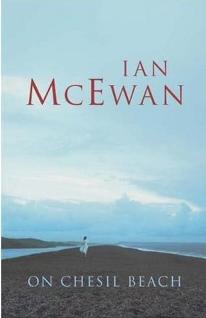
On Chesil Beach by Ian McEwan

  
“Nothing was ever discussed—nor did they feel the lack of intimate talk. These were matters beyond words, beyond definition.”

The only Ian McEwan novel I’d read before this one was ‘Atonement’, and I immediately noticed that they’re similar in theme. This isn’t a criticism, as the theme is a bloody interesting one. Both explore how misunderstandings destroy lives; in On Chesil Beach, however, it’s the words which go unsaid that cause lives to fall apart, rather than false assumptions as in Atonement. 

In 1962, two newly married virgins have a painful, frustrating wedding night. They lack the language to explain what happened, and the story is a painful one.Explaining their distress would involve skills of introspection which the two young adults simply don’t have, due to the well-meaning, stifling prissiness of their society. Each have problems that they can’t understand, let alone resolve. The language they need to explain and explore what’s wrong lies in parts of their minds they just can’t reach.

Melancholic and beautifully written, with prose which compares and weaves history and the mundane with precision, this is a great short read.

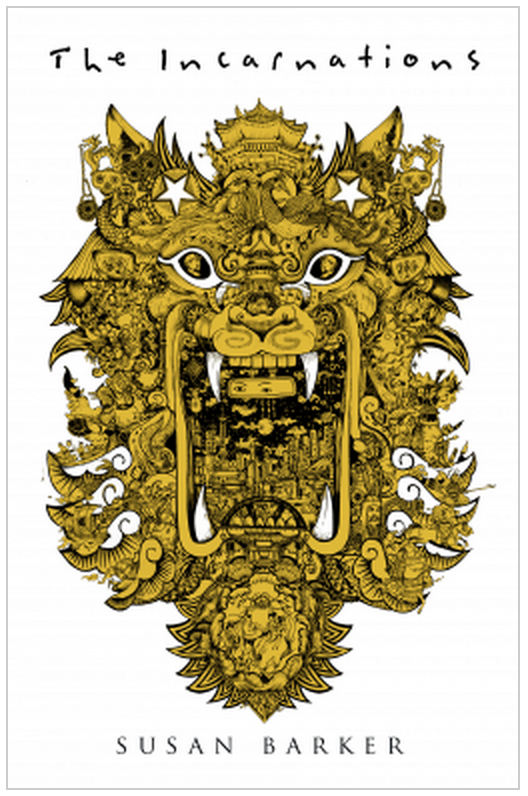
The Incarnations by Susan Barker


‘You will see me again. We are destined to be together. I will come back to you in dreams, or another life.’

The Incarnations by Susan Barker is an ambitious novel that centres around a taxi driver called Wang, who has begun to receive some disturbing letters from someone who claims to know him from past lives. We are swept across Chinese history and shown how these two are connected across centuries and reincarnations. Things get intense with Wang as this mysterious person begins stalking and threatening his family. A number of reviews call this book ‘China’s Midnights Children’, which I don’t think is fair to either Barker or Rushdie. While Midnight’s Children is meandering (in a good way!), The Incarnations is tightly plotted, to the point where, despite the lack of action scenes, the end of the book is so tense that it could almost be called a suspense novel.

Barker has a gift for pacing and quickly sweeping the reader into her worlds. When the past lives are inserted into the narrative, they could have come across as irritating as they often occur after cliffhangers. Instead, the tales of intrigue and betrayal are quickly engaging.

There’s a strange moment later in the novel, which shows the difficulty in fictionalising recent history: we’re shown young Chinese girls being forced to learn obviously skewed stories about the United States, which is explicitly criticised at times by the narrator; at other moments, we are watching these same young Chinese girls brutally torture those they suspect of capitalist thoughts and force feed their classmates pigs blood in a moment that feels like a crossover between Animal Farm and Carrie. I don’t doubt that things could be just as dangerous in Mao’s China as they are portrayed here. The purges and indoctrination are well documented. It’s that there’s something strange about a novel criticising biased portrayals about other cultures while at the same time showing China, over and over again, at its most brutal and cruel.

Despite its ambitions and engaging characters and story, The Incarnations never moves over the line from good to great to me. Things which engage sympathy rather than horror, and small touches of everyday life which can add verisimilitude to a story, crop up far less often than the Big Moments of strife, and the former would lend this novel pathos which is currently just lacking.

We’re shown the dazzle and oppression of this society, but the most riveting plots are of Wang’s marriage falling apart and the fate of his mother. That unfortunately makes the flashes to other lives not as engaging as they could be, despite the careful plotting, as they don’t feel entwined in the main narrative in the way that, say, Cloud Atlas managed.

I want to be clear: despite my complaints, I really liked this novel. The characters are well-crafted, and Barker’s prose is often intriguing even if it’s is let down by stilted dialogue. The Incarnation’s weaknesses only weigh it down as obviously as they do because its strengths helped it climb so close to greatness.