Their Eyes Were Watching God by Zora Neale Hurston

2188dedfec65eef43b2cd898ccd2344fcb7ff726

“…she starched and ironed her face, forming it into just what people wanted to see…”

Some novels give you interesting ideas to think about. Some create an entertaining stories. Some do an interesting mixture of both of these things. A rare kind of book, however, can transport you into a time, place, and body that are far away from anything you would normally experience, and Their Eyes Were Watching God by Zora Neale Hurtston achieves this with ease and grace.

Hurston creates the humid, vibrant landscapes of South Florida through a dramatic third-person prose style that borders on mythical, but it’s dialogue – phonetic, funny, and raw – that lets her truly shine. Crafting insightful, funny conversations that still propel narrative almost looks easy when she does it. Almost.

The characters are flawed, even the most lovable: the protagonist can seem self-centered;  Tea-Cake is affectionate and funny, but his temper and gambling can make him almost dangerous; her other love interests are cruel, but understandable. That’s why it’s possible to really believe and care about them (“loving” characters can be a trite phrase used to describe mere affection, but in this case it’s appropriate), and one of the reasons why I almost didn’t want the book to end.

I was turned onto this book by an essay by Zadie Smith, who once again is scarily perceptive. Her thoughts as to why the love of Tea-Cake and Janie rings so true despite the deluge of poor romance in a lot of otherwise strong fiction, for example:

“[T]he choice of each other is experienced not as desperation, but as discovery, and the need felt on both sides causes them joy, not shame[.]”

Put simply, what makes this novel truly special is that Hurtston’s characters feel as organic in the way they interact and clash. This is a love story with conflict and heartbreak, but completely devoid of cliche and over-sentimentality. That’s something rare and fantastic.

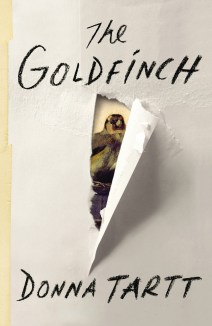
V2 | Review: The Goldfinch by Donna Tartt (with too many mentions of The Secret History)

goldfinch

It happened in New York, April 10th, nineteen years ago. Even my hand balks at the date. I had to push to write it down, just to keep the pen moving on the paper. It used to be a perfectly ordinary day, but now it sticks up on the calendar like a rusty nail.”

Note: I accidentally overrode a version of this after posting. Thankfully, WordPress saved the post. Oopsie.

As always, I’m years late in reading a “trendy” book. When The Goldfinch came out in 2013, the hype was (in the tiny world of book-publishing) enormous. Untrendy confession: with an author I’d never read before, and didn’t know if I was likely to enjoy, it just looked too long for me to bother. I don’t mind chunky novels, but they’re an investment: hours upon days upon weeks of time. I want to have some assurance that it will, quite plainly, be worth it.

The Secret History, which I picked up having heard great things, had me in a pleasant vice grip. The characters were both admirable and despicable, and you were drawn into their lives with a sense of fascination which mirrored the protagonists’. It had a clear-sighted view of class, addiction, and thoughtless cruelty with a strong, ornate style of writing, which made the earnestness of the protagonist’s refreshing. It had an obsession with Ancient Greek and Roman myths and writings which mirrored my own (harbored since around age six). It had a carefully built sense of place: the university felt inviting due, but cold. It was really, really good.

With so many of my own favourite topics covered, along with some beautiful, ornate writing, The Secret History unsurprisingly became one of my favourite novels. Tartt had earned my trust. So into The Goldfinch I dove…

There’s an explosion, a theft, and a panic stricken young man, living with horrendous guilt and anxiety, named Theodore Decker. 

There’s a breathless pace (despite numerous plot diversions) which makes The Goldfinch hard to stop reading. Character twists, a great eye for strange details, and a smart sense for just the moment a reader might start to mean that the common abstract sections examining art and the meaning of beauty don’t leave the plot in a quagmire which the novel would struggle to escape from. These are all great qualities, which was frustrating while writing this review as it made it harder to pinpoint why I still got far less out of this The Secret History.

Maybe it’s unfair to make direct comparisons to another novel; maybe The Goldfinch should be evaluated on its own merits. I’m not sure. All I am certain of is that, possibly due to the artifice and coincidences that everything hinges on in The Goldfinch, many sections feel artificial. I didn’t notice at the time but looking back it’s glaring. Everything hinges on coincidences, which may be why many call this novel Dickensian, but you end up feeling almost pulled along from section to section. Reading it was like going on an exceptionally well-made rollercoaster rather than taking a wander through unknown woods, which was the case with The Secret History. It’s as though—if she doesn’t explicitly state themes, or direct your attention carefully during ambiguous interactions—Tartt is fatally afraid you’ll miss something. Half the fun of a novel comes from what you find beneath their surface. By making things so direct, Tartt weakens the ability of the reader to become truly immersed.

While our protagonist is a subdued introvert, side characters are over the top and extremely endearing. Boris, a wild young Russian, is extremely likeable but dangerous, and when Theo becomes friends with him you can tell this will mean trouble. Tartt captures the dynamic of intense young male friendships shockingly well: the bonding over mischief and danger, the in-jokes, the secret languages, the itch to do something that could end incredibly badly just because you can. Hobie is a charming, fuzzy headed furniture dealer who comes across in his benevolence almost Father Christmasesque—still, he has his complications and blind spots. There’s also a love interest named Pippa who unfortunately never feels quite as fleshed out as those around her; her role is by design to be mysterious, but I never got a sense of revelation about who she was even when I got the sense I was supposed to.

The Secret History’s cast were emotionally stunted narcissists, but you would want to spend actual time with people from The Goldfinch. That’s part of why I wish I loved this book instead of just like it: I want to be compelled to come back and live with the characters again. If The Secret History was cold, with an emotionally reserved cast of characters and an obsession with the past—not to mention heaps of actual snow—the Goldfinch is warm.  It’s the warmth of a house with a fire going after you’ve come in from rain. If that sounds annoyingly abstract, I understand, but trying to convey the mood of a novel almost 900 pages long and taking place over such a long period is necessarily vague. Theo lives in a world with people and places he defines by whether or not they instill a sense of comfort in him. He’s searching for a place that lets him feel like he belongs, continuingly going back to a kindly old Hobie. 

I probably sound like I don’t like the book, but I do. A lot. There are some beautiful reflections about art and the way it can impact your world, for example:

“—if a painting really works down in your heart and changes the way you see, and think, and feel, you don’t think, ‘oh, I love this picture because it’s universal.’ ‘I love this painting because it speaks to all mankind.’ That’s not the reason anyone loves a piece of art. It’s a secret whisper from an alleyway. Psst, you. Hey kid. Yes you.”

Maybe I got the secret whisper from The Secret History and not The Goldfinch because it appealed to my personal interests more, or maybe because I value ambiguity more than straight-headed storytelling. Maybe. But I don’t think so. I think The Goldfinch is a very strong, well-paced novel with a great atmosphere, but it’s so on-the-nose with its themes that it become difficult to connect with on a truly personal level, which is a shame. It yells instead of whispering.

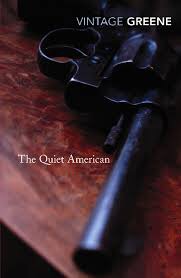
The Quiet American by Graham Greene

  
This feels like a very timely novel, despite that it was written over sixty years ago.

A world-weary reporter works in Indochina, waiting to die. His time writing for The Times in this warzone is essentially an inefficient method of suicide, and he lives with a young local woman whom he knows he will likely abandon eventually. He loves his new country but hates the world it occupies. In enters a quiet American, Pyle, a naive young man with big ideas about democratising the country with a third force, who could rise up and end the conflict.

The key theme here is the danger of good intentions and innocence. This a country ravaged by war, and so any decision made quickly and easily will likely result in innocent deaths. Greene is cynical about human nature but warm regarding individuals, refusing to demonise his characters, even those with ideas he clearly finds reprehensible. At its heart this is an anti-conflict novel without the simplification that these often entail. Greene is still unafraid to be direct, though, through the main character’s simple recurring thought: “I hate war.”

As the foreword points out, there is a fascination with morality and unintended consequences here, as “there is no real way to be good in Greene, there are simply a million ways to be more or less bad.” Colonialism and a specific breed of Western arrogance in regards to far-flung conflicts of many different stripes are examined as the story rolls on. In a moment that feels appropriate to our current moment of history, the idea of military intervention in countries we don’t truly understand is taken to task:

“We go and invade the country: the local tribes support us: we are victorious: but like you Americans we weren’t colonialists in those days. Oh no, we made peace with the king and we handed him back the province and we left our allies to be sawn in two. They were innocent. They thought we’d stay. […] We shall do the same thing here. Encourage them and leave them with a little equipment and a toy industry.”

Changing My Mind: Ocassional Essays by Zadie Smith


“I think of reading like a balanced diet; if your sentences are baggy, too baroque, cut back on fatty Foster Wallace, say, and pick up Kafka, as roughage. If your aesthetic has become so refined it is stopping you from placing a single black mark on white paper, stop worrying so much about what Nabokov would say; pick up Dostoyevsky, patron saint of substance over style.” 

“Changing My Mind” is a strange title for a book of essays. The majority of opinionated writers in the UK often appear worryingly sure of themselves. The columnists littering the pages of our newspapers are a strident bunch, desperate to demonstrate that they know what’s best for us.

Smith isn’t strident about much, despite her obvious mental gifts. This is one of the many reasons she comes across as far more intelligent than the majority of non-fiction writers who have bothered to write in the last few years (that I’ve read). She weaves her way through topics from strange angles, isn’t afraid to take readers on weird asides, and peppers her pieces with footnotes containing strange trivia. I’m certain I won’t be the first person to compare these essays to David Foster Wallace (whom is namedropped in almost half the essays here), but Smith comes across as, if anything, more erudite than him, which is intimidating but great fun to dig through.

The range of subject matter covered is wide considering how cohesive this is: race, E.M. Forster, Christmas, Kafka, the Oscars. Smith has a distinctive voice: she’s learned but friendly, challenging but inviting, sombre but hilarious in the space of a paragraph. She enthusiastically engages with whatever she decides to muse on, and references philosophers, rap artists, Madonna, traditional literary canon figures, anything that appears to pop into her mind. There are fine lines between fun and frivolous, serious and dour, knowledgeable and pretentious, but Smith knows just how to maintain engagement.

Smith’s willingness to question her own motivations and delve into her topics with endearing self-consciousness mean that, despite how often she’s uncertain, you’ll be glad to have heard what she had to say.

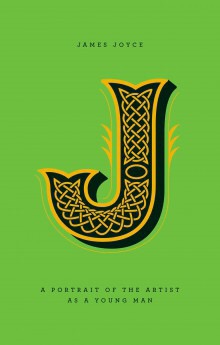
A Portrait of an Artist as a Young Man by James Joyce

  
“To live, to err, to fall, to triumph, to recreate life out of life.”

Starting an Important Book is a constricting moment. The weight of expectation fits snuggly, but I’m never sure if it’s expectation for the book or myself. I’m aware, after all, that if I don’t connect with one of the big hitters of the Western canon that the fault could lie with my own middling knowledge about (in this case) Irish politics, or a phrase’s literary context (could including an allusion to sex really have resulted in a ban? The mind boggles), or whether what now appears cliché does so because every other writer and their mum have already read and copied from this exact book time after time. As a History degree guy, so lacking any formal guidance about Literary Matters, I started browsing the internet and bugging my English degree friends about where to start with approaching Joyce. Everyone has an opinion: 

Try A Portrait of an Artist as a Young Man first, since it’ll give you a good idea what to expect. / Strap your big boy pants and crack open Ulysses; there should be no half measures with this author, damnit. / Try Dubliners so you’ll get a feel for the city and how many strange moods this man can make you occupy. (No one suggested Finnegan’s Wake, and the only Irish person I asked scoffed and said “not to bother with the boring bastard.”)

I went with the simplest option, Dubliners, and by the end I thought I got it. By “it”, I mean why most people respect or love Joyce. By the end of A Portrait of an Artist as a Young Man, though, I realised I hadn’t even cracked the surface. This man has multitudes.

His style is changing constantly. While Dubliners was consistently sober in tone (if not content…), with ornate descriptions overlaying sparse, slice-of-life situations, social classes, and attitudes, Portrait is diverse and joyous. The protagonist lives at an emotional fever pitch, at the edge of having his brain boil over from the intensity:

“Pride and hope and desire like crushed herbs in his heart sent up vapours of maddening incense before the eyes of his mind.”  

“His eyes were dimmed with tears, and, looking humbly up to heaven, he wept for the innocence he had lost.” 

You get the idea. In the hands of a lesser writer this would come across as melodrama, but there’s a wry, ironic tone to the writing that makes our narrator, Stephen Douglas, come across as naive rather than insufferable. 

There’s a swarm of references to Irish politics and Catholic dogma that should be off putting, but most can be picked up from context and the rest never distracted me from the story. Even if I didn’t understand the exact situations being argued over, I understood the characters and so still maintained emotional investment. I’m surprised at how much this wasn’t an issue.

On the writing side, Joyce can make words sing. I mean it: there’s a showy, ecstatic tone that is more reminiscent of music than typical prose. In fact, ecstatic is a good word for this book. Even when the subject matter is dark and the novel gets dense, the intricate language stays elevated, varied and beautiful. 

Some sections are slower and denser than others, but I was always interested in where Stephen Douglas would go in life. He’s an emotional creature, and so you feel swept up in his happiness and guilty, in his innocence and excitement. That kind of immersion is rare and should be bloody well appreciated when it’s conjured up.

Bonk: The Curious Coupling of Science and Sex by Mary Roach

“Kinsey wanted Dellenback to film his own staff. There are three ways to read that sentence, all of them true.”

If you’re the kind of person who would like to know the story of how researchers discovered that electrical dick machines can stimulate knee orgasms in paralysed people, oh boy, do I have a book for you.

To give you an idea of the tone of Bonk: The Curious Coupling of Science and Sex, here are a selection of chapter titles:

  • Dating the Penis-Camera: Can a Woman Find Happiness with a Machine? [Spoiler: Yes!]
  • Re-Member Me: Transplants, Implants, and Other Penises of Last Resort
  • The Upsuck Chronicles: Does Orgasm Boost Fertility, and What Do Pigs Know About It?

This is a hilarious chronicle of science, and the ridiculous lengths some people will go to figure out the most efficient way their bits can fit in people/objects. After Bonk you’ll come away with ridiculous stories, an appreciation for Roach’s sense of humour and renewed gratefulness for puns. This thing is almost annoyingly funny. I kept sniggering, but really, really didn’t want strangers sitting near me on the train to ask me what I was reading. “Oh no, it’s not like that, it’s funny, I promise. Why are you moving seats? There’s no pictures!”

Mary Roach, for our entertainment and knowledge, performed the following acts during her research: measured the length between her clitoris and urethra; observed penile surgery in person, during which metal shafts were inserted right up a man’s shaft; had sex with her husband inside a confining magnetic tube so that researchers could see what people look like inside during the beast with two backs. She then managed to make my most prominent impressions of her as a person ‘shrewd, hard-working and extremely funny’, instead of ‘the woman who was really into weird sex stuff’. She worked too hard for me not to recommend this enthusiastically.

Intuition Pumps and Other Tools for Thinking by Daniel Dennett

“Darwinian thinking does live up to its billing as universal acid: it turns the whole traditional world upside down, challenging the top-down image of designs flowing from that genius of geniuses, the Intelligent Designer, and replacing it with the bubble-up image of mindless, motiveless cyclical processes churning out ever-more robust combinations until they start replicating on their own, speeding up the design process by reusing all the best bits over and over.”

An attempt to teach readers how to “think reliably and even gracefully about really hard questions,” Intuition Pumps and Other Tools for Thinking goes over rough intellectual terrain — consciousness, determinism, artificial intelligence, evolution, all decidedly daunting hills and valleys — with assurance and wit. If you have some patience, you’ll finish with clearer ways to examine and express your own thoughts — or, at least, that’s how I felt.

There are some admittedly shocking jumps in difficulty. More than once I found myself, after twenty pages of lucid explanations, coming across a paragraph I had to read five times just to make certain I had understood it… and even then I wouldn’t have bet money on it. This is the kind of book that will make you feel confident one moment and absurdly out of your depth the next. When you’re jumping from physics, biology, computer science and cognitive psychology, that may just be the nature of the beast, but it fortunately never feels as though Dennett is being an obscurantist. He values lucidity, and by the end of this thing I was grateful.

Dennett manages to glide from one mind-bending mystery to another and address each with wit, clarity, and frightening intelligence. It’s impressive that a man so fiercely bright can keep his work from being too intimidating: his tone is that of a kindly uncle, guiding you with patience through some of the most difficult conundrums your brain can handle.

While this was sometimes dense to the point that it hurt my head, if you find any of the topics interesting you’ll be missing out on a feast for your brain if you don’t give Intuition Pumps a shot.

Station Eleven by Emily St. John Mandel

“The beauty of this world where almost everyone was gone. If hell is other people, what is a world with almost no people in it?”

Station Eleven by Emily St. John Mandel is a post-apocalyptic ode to human invention with meticulous pacing and a number of strong central characters. Mandel finds fascination in things we in modern society take for granted: a computer screen glowing in a dark room; the satisfying sensation of warm running water; bright lights shining in the distance, beckoning us towards a city which we know is safe and filled with food.

The narrative shifts between characters during the initial outbreak of the hyper-deadly virus and a group of actors and musicians who, after the fall of modern civilization, wander through towns performing Shakespeare. We’re shown why “survival is not enough” and the importance of art in difficult times.

It’s easy to get engrossed: the pacing is absolutely rock-solid, so I tore through the whole thing in one sitting. I started out liking very few of the people whose perspective we take as they’re all so deeply flawed, but finished (for the most part) understanding why they act the way they do. The shifting perspectives give us different views on the same events and cast things we thought we understood in a new light. Mendal has a good eye for the way emotion and tragedy can turn people inward, and how small events can seem monumentally important to the person they’re happening to.

There’s an interesting perspective on the way humans impact the environment, eschewing the more common portrayal of humans as a purely destructive force on the landscape, and the atmosphere is thick with melancholy. Mendal always returns to the beauty humans can create together, whether it’s through architecture, electricity, or stage performances, and this makes watching the world falling apart sorrowful rather than merely frightening.

The biggest problem is that the ending action sequences with the troupe of artists aren’t as tense as they’re supposed to be. By this point I’d already watched the end of the world, and Kristen felt like a composite-human created to show the traumatic effects of a post-apocalypse who isn’t characterized distinctly enough to carry the future sections by herself. Whether the ragtag symphony survived a dramatic stand-off just didn’t feel important, as I didn’t know or like any of these people anywhere close to the same degree as Miranda, Clark or Arthur from before humanity’s fall. As such, the climax lacked emotional investment.

Still, Station Eleven was intriguing and, despite its inconsistency, a lot of fun. The mood is sad but tender, and there’s some nice writing strewn throughout. I wish it was more even, but if someone was looking for a real page-turner with a nice sense of pathos it’s worth picking up.


Suttree by Cormac McCarthy

“But there are no absolutes in human misery and things can always get worse.”

Imagine William Faulkner’s The Sound and the Fury crossed with It’s Always Sunny in Philidelphia and you have something close to Suttree. One main character is a brooding rebel who has rejected his family’s wealth and lives on a river catching fish, spending his time drinking heavily and living painfully. Another fucks watermelons.

This is an outrageous and astounding novel. Seemingly aimless, true, but if you stick with it you’ll love how it can both amuse and devastate you.

A good way to approach this is as if it’s the adult equivalent of Huckleberry Finn, a series of loosely connected short stories that make up a greater whole. You follow a vagrant named Suttree as he travels through the underbelly of filth-encrusted Knoxville, Tennessee. There is no obvious plot, merely life in all its banality and wonder in a harsh place where angry, drunken homeless men maraud the streets and life can “always get worse.”

The writing is great, but McCarthy has most stunning prose of anyone alive so that can be taken for granted with him at this point.

I tend to keep a few simple notes while I’m reading a novel so I can keep track of moments or themes that strike me as particularly important or interesting. Despite the fact that, as mentioned above, Suttree is essentially plot-less, I had almost three times as much written when finishing than I normally do. Part of that is probably length, as this is a hefty book, but this also speaks to just how rich in detail and subtext it is. You could re-read each page and find a fascinating detail you missed the first time round. With a great mixture of the profound and the hilariously crude, this was a fitting and satisfying book for me to finish my reading of McCarthy on.

Still, it didn’t fully hook me until quite late in the story. I needed to get used to the strange, drifting narrative. Let Suttree wash over you like cold water: adjust, be patient. You’ll be rewarded. There’s something great lurking beneath the murky surface.

The Trial by Franz Kafka

  
“Someone must have slandered Josef K., for one morning, without having done anything truly wrong, he was arrested.”

A man has been arrested and he doesn’t know why. He doesn’t know who is trying him, or under what authority they operate. He doesn’t even know what crime he supposedly committed. When he proclaims his innocence and appeals to his accusers’ common humanity, he is reprimanded as “that is how the guilty speak.”

Welcome to The Trial by Franz Kafka, where the world is a series of confusing systems which are almost impossible to navigate through without losing your mind or being crushed by the futility of it all. There’s something humorous about the absurdity here though, as farcical characters scramble around and appear to have no idea what they’re doing (which is normally making someone else’s life worse through sheer incompetence); this is comedy in its blackest shade.

The line between despair and ridiculousness to the point of hilarity is a tightrope that Kafka never quite lets you climb down from. There’s an overwhelming sense of tension, but I would struggle to point to exactly where it comes from. I normally take at least a few breaks while reading even a book as short as The Trial, but I finished it quickly as I wanted the sense of impending doom to bloody end already! In a good way. Sort of. I’m glad I read it, anyway. It’s not often a novel can distil desperation into its purest form, after all. It was like a good thriller, but one where you’re propelled forward by a sense of incredulousness and disorientation. Very unusual, very effective.

A messy book by design, even if you you’re the kind of person who has a real thing for Camus and thus keep alternating between a look of frustration and laughing hard, don’t go in expecting a traditionally satisfying ending. If you let yourself get swept up, though, you’ll put it down and feel like the annoyances of everyday adult life make just the slightest bit more sense.